
Transcript
7,303 words · about 32 min readGenerated automatically from the audio, so it may contain errors. Tap a time to listen from there.
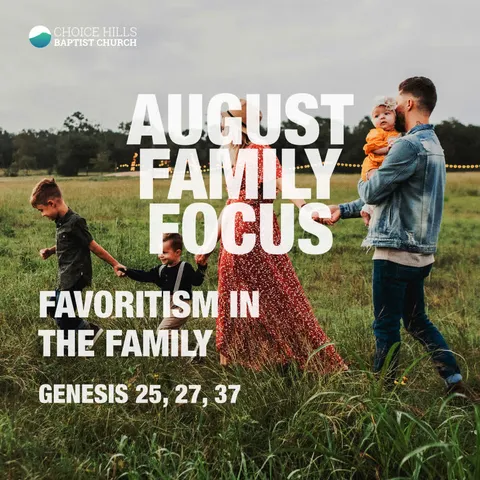
Alright, let’s get in our Bible to Genesis chapter 25 tonight. Genesis 25 tonight. We’re gonna look briefly at the life of Jacob and see something related to the family.
Genesis 25 We’re gonna start at the very beginning of the life of Jacob. So at this point in Genesis 25, Rebecca, Jacob and Esau’s mother is expecting, and it’s time for her to have these two babies. And so that’s where we pick up in verse number 25. Let’s pray and then we will we’ll read these verses. Our father, we come to you now in the name of Christ. We thank you for lord being your ears being open to our our cry, our our request. We pray that you would bless our time in your word, that you would stir us up, and that you would teach us from it. Lord, and apply it to us in the way that you know that we need it. Lord, you know the hearts and and and thoughts of each person and you know the things that each person struggles with and lord, I just pray that this message which is recorded in your word that you have given us the record of these things on purpose and so lord, help us to grow from it and that you would strengthen and help your people and especially the families not only those who have kids, but those who are children, and children of their parents, and Lord that we might be strengthened, that we might be in your will.
So Lord help us and guide us as we study your word tonight, we ask in Jesus name, amen. Now, there’s one, as as we start in verse 24, in this in this passage, this section of Genesis, about 10 chapters, we’re not gonna read all 10, don’t worry, but, in this section, there is there is one particular repeated principle or truth that seems to come up over and over again and it it’s it’s kind of it doesn’t happen very many other places in scriptures. As far as I know, the only other place, especially the only other prominent place, there’s no other place in the Bible, in the historical portions of scripture where you’ll find this truth so clearly and repeatedly given to us.
Read the full transcriptShow less
And so, and it is related to the family. So let’s just dive right in. Verse 24 of Genesis 25, the Bible says this, and when her days, this is Rebecca, when her days to be delivered were fulfilled, behold, there were twins in her womb. And the first came out all, the first came out red all over like an hairy garment. And they called his name Esau, which means red.
Right? Pretty easy. And verse 26, and after that came his brother out and his hand took hold on Esau’s heel and his name was called Jacob. And Isaac was threescore years old when she bare them. And the boys grew and Esau was a cunning hunter, a man of the field, and Jacob was a plain man, dwelling in tents. Now here’s the crux, here’s where we’re first introduced to this truth, to this issue, okay? Verse 28, and Isaac loved Esau because he did eat of his venison, but Rebecca loved Jacob.
This is the truth. This is the the concern, the characteristic, however you wanna put it, that is prominent in these several chapters, chapter 25, 26, and then into 27, and then into 37 as well, it is this, favoritism. Favoritism. Jacob’s life least, Jacob’s life is marked by many, obviously many things that went on in his life, but one of them from the very beginning of his life that you see is favoritism in his family, started by his parents.
And you see in verse number 27, the Bible says this, and the boys grew and Esau was a cunning hunter, a man of the field, and Jacob was a plain man dwelling in tents, and there’s another place where the Bible says that Jacob was a smooth man. So obviously, he wasn’t hairy like Esau was, but Esau was like that from his birth. And so, when you look at these two children, you you can see where they’re born in verse 24 or in verse 25, they’re different.
You see this, they’re different. Obviously, in a family, kids are not all the same. And those of you who have multiple children, you know that they all come out different. They look different, they act different, they have different personalities, different likes, different dislikes, different body structures, different intelligence capabilities, some are studious, some are not, some are hands on, some are not. Know, some are fat, some are skinny, some are, you know, mean, that’s just, this is the way it is with kids. Kids are all different, right?
And that was true with Jacob and Esau. And this has nothing to do with their any fault of their own. They’ve not done it. They’re babies, right? But they’re babies and they’re different. And I just wanna give you a few things, if you’re writing these down, just a few things about favoritism, few statements about favoritism that hopefully will help you. The first thing I want you to see is that favoritism begins because kids are different.
Now that might seem obvious to you, but remember they started different, and then as they grew, verse 20 verse 27 says, And the boys grew, and Esau was a cunning hunter, a man of the field, and Jacob was a plain man dwelling in tents. So not only did they look different, when they came out, one was hairy, one was not, one was red, one was not, but they also as they grew, they kind of diverged into two kind of different lifestyles.
And so, Jacob or rather Esau was a hunter and he liked to be outdoors. He was an outdoorsman we would call him in our day. And then Jacob was he he was a home he was a homebody. He liked to be at home and so he was he was not a hunter. He was a man who liked to be in the tent. He was a plain man. And so you can see Esau was was someone who had a mark of distinction. He was renowned, right? He had a he had an ability that was unique perhaps with that maybe a standout characteristic and Jacob had none. That’s what the idea of plain means. He was simple. There’s nothing, there’s no remarkable quality of Jacob. He didn’t like to be outdoors, he liked to be in tent. And where was his mother?
His mother probably spent a lot of time in the tent, Like around the house. And taking care of things on the home front, while Jacob, or rather Isaac, who was a herdsman, was out in the fields. And one thing it might be hard for us to kinda wrap our brain around, at this time in history when you went out into the field, I mean you were gone two weeks. Like you didn’t come home at all.
And so, know, you went out and you walked a long ways. I remember one time in Cambodia, we visited someone and they wanted us to come to their house, and so we went to their house in the village, but then they wanted us to go out further where they, their little kathom, a kathom is like a shack, and that’s where they lived for like a week at a time, and they would only come home in the weekend because it was a long walk. They walked. There was a long, we’re talking hours to get to where they worked, and so they didn’t do that every day. And that’s kind of like what you have here. Jacob went out into the field, and he was out on the countryside taking care of the animals, and rather Esau was, and Jacob was at home.
So who do you think, just as a result of those natural characteristics, not good, not bad, just the way they grew up, they’re different. But as a result of those natural characteristics, one parent tended to favor one of them while the other tended to favor the other. And Esau was no doubt with his dad a lot, Isaac, out among the animals out in the fields. Well, he hunter, was right? And Jacob was with his mom a lot.
And so that’s not bad, that’s not good, that’s just the way it was because kids are different. And we as parents, we need to be careful. Because sometimes our tendency is to try to force our kids into a certain and particular mold, I’m not talking about righteousness, unrighteousness, I’m just talking about the way the natural natural proclivities of each person come out, and it’s all different. Some of my kids are hands on, and some of them are more studious, and some of them like to draw, and some of them like to write, and some of them despise it.
And literature is the subject they like the least. And so, but the point is we don’t need to force them into that, and here’s where it starts to get a little bit hairy, no pun intended, is that sometimes we tend to put pressure on our kids to do the thing that we like, right? We put pressure on them because we like to be an outdoorsman, so we want them to be. Or we like, we’re studious, I felt this pressure myself because I’m, I like, you know, I took physics class in high school and I liked it. I took algebra and I liked it. And I hated literature.
So obviously, my kids will tell you, I avoid everything to do with their school that has to do with literature. I pawn that off on somebody else, my wife, because she likes literature. And I lean into things related to science and math. And that’s just a small example. The kids know it’s true, but listen. We make a mistake if we try to project that onto our kids and force them into a mold they don’t wanna do.
That is not where their strengths lie. We make a mistake when we do that. But I’m kinda getting off track here, but notice, these characteristics of these boys are just natural. They know I was at fault. Like Jacob is not better because he’s at home in the tent, and Esau is not better because he’s out in the field. It’s just the way they are, it’s just life, kids are different.
And also, because of that difference, it is natural for us to be drawn to and attracted to people who have the same interests and tendencies as we have ourselves, is it not? That’s essentially how we get our friend group, right? We find people that have the similar values, similar interests, think the same way, similar worldview, and we’re drawn to those people and that’s how we interact with those around us.
We’re friendly with them. And when among our friends, that’s fine. You know, to some degree or another, although I think there is good, there’s benefit in maintaining a broader friend group that are different than you, right? Is that, that’s kinda like what the church is about. It’s about everybody who’s different. But anyway, we learn to love one another, even though we might have different viewpoints and different, you know, tendencies and such.
With our friends though, there’s some of that kind of, we might call it polarizing, you know, where we kind of magnetism toward a certain group or type of person, that might be okay, but among our kids it is not. And yet it’s common. Where some kids, one parent is attracted to one type of kid and another parent’s attracted to another type of kid, that is a real thing.
That is a real thing. And that’s what’s happening in this family. So favoritism begins because kids are different. Look if you would at verse 28. And Isaac loved Esau because he did eat of his venison, but Rebecca loved Jacob. Look at chapter 27.
Now you can already see in that verses, if you read it, you know, with the kind of tint that I’m putting on it, is it not a little bit ominous? You know, Isaac loved Esau because of his venison, and Jacob, Rachel liked Jacob, and it just kinda stops there, and it’s like, okay, what are you trying to say? Well, what he’s trying to say is there’s a problem. Alright, look at chapter 27 verse number two.
And this is Isaac now, and he said, behold now I am old, I know not the day of my death. Now therefore take I pray thee thy weapons, thy quiver and thy bow and go out into the field and take some venison. So this is Isaac speaking to Esau. And make me savory meat such as I love and bring it to me that I may eat and that my soul may bless thee before I die. Now Isaac is not doing anything wrong here. Remember, Esau is the elder.
Esau is the one who by right has the birthright. Now we know he sold it, but he does have the birthright. So Isaac’s not doing anything wrong here in this particular verse. Look at verse five, and Rebecca heard when Isaac spoke to Esau her son. And Esau went to the field to hunt for venison and to bring it. And Rebecca spake unto Jacob her son saying, behold, I have heard thy father speak unto Esau thy brother. Make me bring me venison and make me savory meat that I may eat and bless thee before before the lord before my death. Now, therefore, my son, obey my voice according to that which I command thee. Go now to the flock and fetch me from thence two kids of the goats, and I will make them savory meat for thy father, such as he loveth. And thou shalt bring it to thy father, that he may eat, and that he may bless thee before his death. And Jacob Jacob said to Rebekah’s mother, behold Esau my brother is an hairy man, and I am a smooth man. My father peradventure will feel me, and I shall seem to him as a deceiver, and I shall bring a curse upon me, and not a blessing.
And his mother said unto him, upon me be thy curse, my son. Only obey my voice and go fetch me them. And he went and fetched and brought them to his mother, and his mother made savory meat such as his father loved. And Rebekah took goodly raiment of her eldest son Esau, which were in the with her in the house, and put them upon Jacob, her younger son. And she put the skins of the kids, of the goats upon his hands, and upon the smooth of his neck, and she gave the savory meat and the bread, which she had prepared into the hand of her son Jacob. I’ll just say this, he must have been one hairy dude.
I just read that, I’m like, man alive, he must have been a gorilla. When we get to chapter 27, what do we see? It was ominously mentioned in verse five. Now we’re in 27.
What started as just a simple preference in the kids is now a wholesale fracture in the family. So, here’s the second thing. Number two, favoritism causes fractures within the family. It’s not just a matter of personal preference. Because at this point in the story, what was originally just simple favoritism, you know, as a result of common interest or whatnot, is now turned into Rebecca actively undermining her husband, who is the leader of her home, the will and the decision of her husband as the leader.
And that all goes back to her favoritism. So, not only is there a divide for for the first divide that you see, the first real fracture, and this is not this is not small business. This deals with the future of the family. This deals with the future of the of the descendants. Who’s gonna be and in fact, we know that, you know, in god’s providence, Jacob is going to be blessed and the elder shall serve the younger. Remind remember, the Jacob is actually going to be the one in charge of the family and so the promise is gonna be passed through Abraham, Isaac, and then through Jacob. But as far as a matter of morality, they don’t know all that.
And so, Rebecca is undermining her husband’s her husband’s proper place in the family. She’s not doing right. Obviously, she’s being deceptive. This has turned into a major division in the family. The husband and wife are no longer in unison on the kids. That’s a problem. That’s a problem. When mom and dad are not in one mind about the children, you got a problem. You got a problem.
And that’s, you have a fracture, brother’s a little ring. Can you hear that ring brother? Brother Phil, I don’t know what it is, but maybe tap it down a little bit.
So there’s a fracture in the family because one of the parents is siding with his favorite and the other is siding with her favorite, and so they’re against one another, but that’s not it. That’s not all. The order of the home in this passage is now broken. Jacob is doing his duty seeking to bless the firstborn, but his wife is not in submission to his his his the the duty and his leadership as a husband because and this is the this is the root of the deception. She wants out of favoritism now, she wants her will. She’s asserting through manipulation and deception her will upon the family.
Why? Favoritism. Favoritism. You could say, well, isn’t that what God wanted? No. The Lord took evil and did his will with it, but that doesn’t justify her deception, you see, in the text. It doesn’t justify the deception of Rachel. She is willing to resort to these to this level, this sinful level in order to bring her will to pass, all because of favoritism. Now I said the fracture starts with the husband and the wife, and it’s there.
But it will continue into the children. Look if you would at chapter 37. Chapter 37. Verse two. These are the generations of Jacob. Joseph being 17 years old was feeding the flock with his brethren, and the lad was with the sons of Bilhah, with the sons of Zilpah, his father’s wives. Now trivia question, Joseph is the son of which wife? Rachel. Correct. And Joseph brought unto his father their evil report.
Now Israel loved Joseph more than all his children. Now we’ve gone way into the future now. Now Jacob, the one who was a baby, we just read in ‘27, is now an adult who has children of his own. Now, Israel loved Joseph more than all his children because he was the son of his old age. Now, stop a second. Did Joseph have any part of the order of the children?
Just like Esau had no real say in what his proclivities would be as a hunter, or Jacob as a plain man. That was just a fact of nature. Well, is a fact of nature. Joseph came after all the other kids except Benjamin, and so, for that reason though, Jacob, Israel is showing favoritism. Favoritism. And not only is he showing it, but he is he is displaying it.
And he made him a coat of many colors. So everywhere Joseph went, all the other brothers were reminded that Joseph was the favorite. So let me give you the third thing which is this, favoritism is passed down in the family.
You know, no wonder that Jacob practiced favoritism in his family because it had already been normalized by his mother in that issue with Esau. Like he knew everything that had happened. I mean, knew everything that had happened with his mother. He was part, he took part in all of that. And here’s the thing with Jacob. Jacob was the the receiver of the benefit, the one who benefited from the favoritism of his mother. And eventually he had to leave Canaan and go back to Syria because Esau wanted to kill him as a result of his mother’s favoritism and that whole scheme with supplanting Esau’s blessing.
And so he was the one who benefited from it. So he wasn’t the one who felt the pain of that like Esau did. And so now what is he doing? He’s doing the same thing. That tendency within a family is now being passed down and even flaunted in his family now. Now let me just bring something to your attention.
There is a tendency in families to pass down the way we were raised to our children, is there not? And here’s the thing, we think it normal because that’s the way we were raised. Right? I’ll give you an example. I remember there was a particular family member that we would spend a lot of time with and our family member would raise a cordless phone or a shoe in our direction as a threat if we were acting up. Truth is we deserved it. But she would, she would do that. She would raise it.
And kind, and that’s just kind of a light hearted example. I don’t remember ever being hit with one, but you know, maybe I was, maybe I have amnesia, maybe it hit me so hard, I don’t remember. But anyway, but that kind of thing, that’s the kind of thing we get used to as a family and those kinds of tendencies and practices and characteristics in a family tend to get passed down.
And if we’re not careful, here’s the key, if we’re not careful things that are not biblical, that are not godly, will be passed down through our genes as it were, down to our kids.
And before we know it, we’ll be doing the same patterns of behavior that are not Godly, that are not Biblical with our children that our parents did with us. And at some point, somebody needs to step up and stand up and say, wait a minute.
I am going to evaluate by God’s word the way I was raised, not to be critical of my parents for sure, but in order to raise my own kids not leaning just simply upon the way it was done to me, but to raise my children according to a biblical method, not just simply the way I was raised. A good example of this is in the application of the rod of correction.
There’s a lot of people, for instance, that are, since brother Wayne was up here, I’ll pick on him a little bit. There’s a lot of people that are of brother Wayne’s age who were beaten mercilessly. Not saying you were, I’m just saying a lot of people in that age group, some of you know what I’m talking about, that were, I mean to the point of, I mean beaten bad.
And they say, and sometimes people that go through that will say, well, mean, didn’t do me any harm. But see, that’s not the right way to view it. Passing that down to our kids is not biblical. Now, don’t throw out the baby with the bathwater. What we do is we evaluate it by the word of god and we say, what was right, what was wrong, I’m not just gonna continue and perpetuate the the unbiblical methods that were in my family before. What I’m gonna do is I’m gonna try to raise my family in a biblical way and hopefully that gives some a tailwind to my kids when they get ready to raise their kids.
That they’ll start with a biblical frame of reference and it’ll help them and their family. So, not everything that’s passed down is good, favoritism is one of those. Well, my mom and my dad, had a favorite and so it didn’t seem to destroy our family. Well, but that doesn’t mean it’s a, a actually I’ll just say it, favoritism is a sin. It’s actually a sin, I’ll show it to you.
So favoritism is passed down in the family. Number four, favoritism breeds evil within the family. Look at Genesis 37, verse four. Genesis 37 verse four. The Bible says this, And when his brethren saw their father loved him more than all his brethren they hated him.
And they could and could not speak to him, speak peaceably to him. Why not? Why did Joseph’s brothers hate him? There is one reason. It wasn’t because Joseph did any harm to them, Joseph was innocent. He’s just living his life. He couldn’t control the way his dad treated him.
Joseph now is being mistreated, wrongly now, there’s no excuse, but Joseph is being mistreated because of the favoritism of his parents. Look at verse eight, and his brethren said unto him, shalt thou indeed reign over us or shalt thou indeed have dominion over us? And they hated him yet the more for his dreams and for his words. Verse 11, and his brethren envied him, but his father observed the saying. Look at verse 18, same chapter.
And when they saw him afar off, now this is Joseph is coming to them a little bit later, his dad has sent him to find his brothers, and when they saw him afar off, even before he came near unto them, they conspired against him to slay him. And they said one to another, behold, this dreamer cometh. Come now therefore, and let us slay him and cast him into some pit and we will say, some evil beast hath devoured him and we shall see what will become of his dreams.
You know what has been created here? What has been created here is an evil disposition of his brothers to him even though he’s done no ill to them. Now, what I said was favoritism breeds evil within the family.
Now if we’re the parent who is showing favoritism and we all have a tendency to do this, We do that, why do we show favoritism? Why did Rachel, not Rachel, Rebecca show favoritism toward Jacob? Well, she wanted him to be blessed. In other words, there’s a motive, a sincere motive where you want the one who is favored to be blessed greater maybe than the others. To promote that one, to bless that one above the other kids. But that’s just from the person who practicing favoritism.
But among the children, here’s what you have to remember, among the kids favoritism is poison among them. So what is intended as a benefit and a blessing to them is actually poison in the kids, in the kid group. Because it creates and breeds hatred and envy and contempt which is what we see here. Now, there’s a few things it does. Now think about this. Joseph loved I’m sorry, Jacob loved Joseph more than the others.
Jacob gave Joseph the coat of many colors. Jacob wanted Joseph to prosper prosper and be blessed above the others. He loved him more. It wasn’t just a matter of affection. He actually doted on him more that as indicated by the coat of many colors. But what did that do? That actually put a target on the back of Joseph though he had done no wrong. And that ultimately hurt Joseph.
So favoritism ultimately hurts the one being favored. You think about it especially when you’re a parent, if you have a favorite child, you have a favored child. That’s the child we often give the benefit of the doubt to. That’s the one who we spare the rod when the rod is called for. That’s the one that we’re going to, we’re gonna go easy on them more than the others.
But is that helping them? No, it’s not. So what is supposed to an affinity for them is actually bringing them more harm. As is true with Joseph. But it also lays a stumbling block before the kids who are not favorites.
Now we already saw in Genesis 38 verse number I’m sorry, verse 37 verse number 11. Look at that if you would. And his brethren envied him, but his father observed the saying. They envied Joseph’s brothers envied him because of the favoritism of his father.
Now does that excuse those brothers for the wickedness and evil that they did to Joseph? Of course not. But by Jacob’s favoritism he did indeed lay a stumbling block before all the other brothers for them to sin. They, he in other words, he provoked them to envy. Envy is the feeling of mortification. I’m reading the dictionary definition. The feeling of mortification and malice and ill will occasioned by the contemplation of superior advantage possessed by another. So, they saw, our dad loves him more, so I hate him.
In other words, that envy which came up as a plant and bore fruit which led to this, which we read in chapter 37, that envy was sown not by the brothers, that envy was sown into the ground by Jacob.
He laid the stumbling block that caused his sons to sin. Colossians three twenty one, and this is related to this. Fathers, provoke not your children to anger, lest they be discouraged. That’s one way that we can do it as parents.
Yeah, we we I’ll say we keenly understand this. Anybody who lives, any Christian who lives in the flesh knows exactly what this feels like in spiritual realm. If you see someone who seems to be more blessed by God and who seems to be we perceive, God favors them more because they got a raise at their job or they got a promotion or they’re in good health or they, know, things are going well at their church or things are going well in their family. We see that and our perception, that’s the key, our perception is that God’s smiling on them and he’s not smiling on us. It doesn’t really make us mad at God, but it does make us envy at them. And God didn’t do anything wrong, obviously.
But our perception of that causes, it produces envy. This is where envy comes from. Now we know in a family where God is not, know obviously you’re talking about human family members, oftentimes it’s not just perception. In fact, with Jacob it wasn’t perception, it was real. Jacob did actually favor Joseph and that produced envy. That was a stumbling block. So listen, if we are exercising or practicing any kind of favoritism in our family, we’re actually prompting and provoking our children to sin against God.
Not only that, but it sows discord. We all know what Proverbs says about sowing discord, right? These six things doth the Lord hate, yea seven are an abomination unto him, a proud look, a lying tongue. Go through the list, the last one is, and he that soweth discord among brethren.
Jacob is doing that. He’s sowing discord among them. The relationship, look at verse four again of chapter 37. And when his brethren saw that their father loved him more than all his brethren, they hated him and could not speak peaceably unto him. That’s not a blessing to Joseph. He has no relationship with his brothers. They can’t stand him. How many of you like to be in a crowd of people that can’t stand you?
Brother David, Sister Liberty, when you go to the abortion mill and there’s a crowd of protesters and activists that are supportive of that debauchery. Are you enjoying yourself when you’re in the middle? No, no. Listen, how was this favoritism helping Joseph? It wasn’t.
His relationship with his siblings was destroyed. Favoritism produces the conditions that cause some children to have a default dislike and ill will toward their siblings even before the one who is favored has done wrong. It’s default. Whose fault? The parents.
That’s a lot of influence in our family, isn’t it? That’s a lot of influence. You mean the way that we conduct ourselves with our kids will produce envy, ill will and malice among them? Yeah, that’s what we see here.
And the last thing here is this, it undermines, when we show favoritism in our family and among our kids, it undermines our integrity in our leadership as a parent. It undermines our integrity as in our leadership. Look if you would at James chapter two.
You can leave Genesis, we’ll not come back to Genesis. Look at James two and we’ll finish up here tonight. James two verse one, the Bible says this, my brethren, have not the faith of our Lord Jesus Christ, the Lord of glory, with respect to persons. Someone might say, but we’re not talking about our faith. We’re talking about our family. And see here is where family matters, where the way that we view our family comes into sharp focus. Here’s a question.
Do you as a family apply biblical principles to your family? Or do you categorize your family interactions as something different that aren’t covered with biblical principles? Truth is you should practice. We all should practice biblical principles that could be applied in church or among Christians to our families. Because they’re good, and they’re right, and they’re best, and they’re healthy. So, we should not have this this religious and secular view. No, it is one.
It is one. Our family is the lord’s family. So, verse one cannot be used to say, well, that’s this isn’t the church. It applies also to the family. Verse two, for if there come unto your assembly, a man with a gold ring in goodly apparel and there come in, also a poor man in vile raiment, And you have respect to him that weareth the gay clothing and say unto him, sit thou here in a good place and say to the poor, stand thou here or sit here under my footstool.
Are ye not then partial in yourselves and are become judges of evil thoughts? You know what, this is just a different circumstance but the same truth, which is we gravitate toward one type of person and avoid the other type of person. Our kid, this kid is this kid is nerdy and bookish and so we gravitate or this kid is an outdoorsy type so we gravitate. This guy’s rich so we gravitate. This person’s poor and we avoid him, same thing.
Verse five, hearken my beloved brethren, hath not God chosen the poor of this world, rich in faith and heirs of the kingdom which he hath promised to them that love him? But ye have despised the poor. Do not rich men oppress you and draw you before the judgment seats? Do not they blaspheme that worthy name by the which ye are called? Verse eight, if ye fulfill the royal law according to the scripture, thou shalt love thy neighbor as thyself, ye do well. But if ye have respect of persons, ye, what does it say?
Commit sin. You know what favoritism is in your family? Respect of persons. That’s what it is. It’s sinful. And are convinced of the law as transgressors. Not only that, but it’s contrary to the character of God. Listen to these verses, We don’t have to turn to all of them, but I just wanted to show you how many times the Lord reiterates this truth about himself. Deuteronomy ten seventeen, for the Lord your God is a God of gods and Lord of lords.
A great God, a mighty and a terrible, which regardeth not persons nor taketh reward. Second Chronicles nineteen seven. Wherefore now let the fear of the Lord be upon you. Take heed and do it, for there is no iniquity with the Lord our God, nor respect of persons, nor taking of gifts. Acts ten thirty four, Peter said, then Peter opened his mouth and said of a truth I perceive that God is no respecter of persons.
Romans two eleven, for there is no respect of persons with God. Galatians two six, but of those who seem to be somewhat, whatsoever they were, it maketh no matter to me, God accepteth no man’s person. Ephesians six:nine, And ye masters, do the same things unto them forbearing threatening, knowing that your master also is in heaven, neither is their respect of persons with him. Colossians three twenty five, But he that doeth wrong shall receive for the wrong which he hath done, and there is no respect of persons. First Peter one seventeen, And if you call on the Father, who without respect of persons judgeth according to every man’s work.
Eight times, just in these words, there’s probably some others, the Lord says, I do not practice favoritism. You say, what is respect of persons? Respect of persons is not not when you come down hard on someone because they did wrong. That’s not what we’re talking about. Respect of persons is when some characteristic of that person that is not a choice that they’ve made, not something that they’ve done, not a matter of good or evil that they’ve done, but you favor that.
Their station in life, the amount of money they have, Their, you know, whether they’re fat or skinny, tall or fat or skinny, tall or short, whether they’re, you know, they like basketball or baseball or not, no sports at all. It’s those things.
The Lord does not practice that with us. And so for a parent to do it with their children is contrary to God’s nature, God’s character. And so what must we do? Last thing. We must as parents root out favoritism in our families. I’m tell you something, let me be direct.
Even if your kids are older, even if your kids are adults, they know who the favorite is. And they don’t forget. They don’t forget. No matter how old they get. And that default issue that is in their heart, planted there by us as kids, doesn’t go away easily.
So we must, as James two tells us, recognize and call out partiality for what it is. Partiality is a sin. Like James Shue tells us, we must go out of our way. I’m talking especially about our kids now, even adult kids now. We must go out of our way to ensure that we do not show partiality.
Listen, and I’ll just, this is a little bit of additional advice, even the perception of it, be careful. Be careful of it. And like James two tells us, we must, look what it says, because this is the way you solve this. Verse eight, James two verse eight, If ye fulfill the royal law according to the scripture, thou shalt love thy neighbor as thyself, ye do well. This is the answer to partiality to favoritism.
This is it. Because in one case we show love and we have two different standards of love, but that verse is the one standard, which is to be applied in both cases. Right? To Jacob, to Esau, to Joseph, and to Reuben, and to Simeon, Judah, and all the rest. Thou shalt, there’s not two standards, there is but one. Thou shalt love thy neighbor as thyself. And so here’s the truth.
We must hold the same standard of love toward each of our children. Now pause here a second. Even for people that have actually have favoritism, sometimes we’ll say, but I love all my children the same. But we’re not talking about the words. The kids know by the deeds what the truth is.
Who cares about words? Words don’t matter. Oh, I love all my kids the same. Then why is it that one is treated with favor and the others are not? That is love. You’re showing that. And they see it.
Now the last two things I wanna say to you is this, and this is basically the invitation. This is the call. I know we’re all in different places, some of us have little kids, teenagers, kids that are adults. Kids that have kids of their own.
It is never too late to get these things right. But to do so, if you have been, if you have shown favoritism to your kids, know if your kids have said, because you know, there’s always these times where kids kinda lose it and they’ll say things by accident. They’ll say, they’ll blurt it out, right? And reveal some dark thought that they’ve had for some time. So we all know if that’s there.
If that’s the case, we need to openly confess to our kids that we’ve been showing favoritism and seek their forgiveness. Will you please forgive me? But I wanna speak to one other group in here.
It could be that some among us here maybe aren’t the ones who practiced favoritism, but the ones who experienced the bad effects of favoritism. Remember what we saw earlier? Jacob favored Joseph which prompted envy and hatred and discord in his brothers. See that? It might be that you’re a person who has been on the short end of the stick if you will. And that favoritism was practiced against you, not in your favor but against you for another.
And you’ve got something in your heart. You’ve got envy, you’ve got that default ill will or malice toward one of your siblings who has done you no actual harm as a result of that.
You must remember that baseline envy, ill will in our hearts toward our siblings will harm us and will harm our families and it might be something we pass on to them. Like Jacob passed on favoritism through his family. So there might be somebody in here who’s been on the negative end of that. And so you might have something in your heart toward one of your siblings as a result of that. Let me encourage you to do this, you gotta root that out of your heart. You gotta get that thing right.
You gotta get your heart right with the Lord and not let that bitterness and that resentment seed as a result of whatever happened in your home. Brother Dave is gonna come, brother come on and I’m just gonna give you an invitation. We’re gonna sing a few songs and I want to invite you. If the Lord’s worked in your heart, if the Lord’s put his finger on something in your life and you feel like you need to deal with that, you need to talk to the Lord about it, confess it, get it right, pray for somebody, whatever the case might be. I wanna invite you to come and and, and talk to the Lord about it. Come down come down to the front and, pray and seek the Lord and get some help. Brother David, lead us in a song, brother.