
Transcript
6,726 words · about 29 min readGenerated automatically from the audio, so it may contain errors. Tap a time to listen from there.
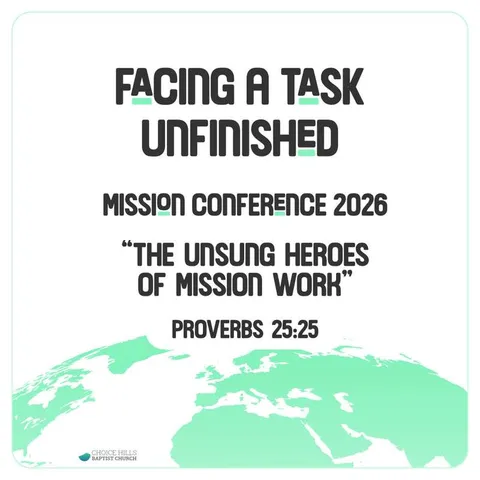
All right, we’ve talked about a lot of things tonight. And tonight, I just want to give you some good news. The Bible says in Proverbs chapter 25, verse 25, as cold waters to a thirsty soul, so is good news from a far country. Now, a lot of times when missionaries go or when missionaries come back and we come in, we show you the presentation. And everybody said, boy, the missionary is here.
Well, the unsung heroes of the mission field are those converts who are there, pastors, Sunday school teachers, and just those local folks that are, they’re just faithful to church. And that might not mean a lot in Greenville, South Carolina, but I’m telling you, when you get into some of these places and you have some converts and they’re brave enough to come out to your services, that’s a big deal.
If you live in China and some of these other places, you get put in jail for that. So we are blessed in having some good converts through the years. So that’s all I’m going to talk about to you tonight. Just some people that I know.
Read the full transcriptShow less
Sometimes when you, well, it’s like me, you know, I can’t sing. I’m always in awe of the piano player and the special tonight. And I think it’s absolutely magic if you can use your fingers and do that and sing at the same time. That’s got to be magic. I don’t know how you do that stuff. But nevertheless, sometimes on the mission field, just the smallest thing that you say will affect somebody.
And you’d be amazed how the simple gospel of Jesus Christ works in every single culture in the world. All you need to do is translate it and promote it in a proper way where they understand it and it works. It works. Sometimes we would have a Sunday, I’d preach somewhere and I’d use flannel graph. Now, all my messages are simple. You all know that. And the reason for it is I preached in the bush of New Guinea for 28 years.
And so to get the point across, sometimes I just use flannel graph. And I’d preach or tell the story and show the pictures. All right. And they associate that picture and then they understand what you’re talking about. And I did the little thing on Moses and the basket and the bull rushes, you know, that story. And I don’t know how many times we used that story. And we had the flannel graph and it had baby Moses in that little boat.
But there was a cover over it. And you took that little cover off. And man, my kids in New Guinea, I don’t care if I did that 40 times, they were surprised every time that there was a baby in that basket. Just whatever works. Then we had another guy. He’s always talking about Moses’ big canoe. He’d get Moses and Noah mixed up. But you know, you deal with what you got.
We were walking through the village one day and it was a Wednesday night and some teenagers were sitting around and some of them were our boys from church. I said, come on, guys, we got church. And this teenage girl said, where are you going? And I said, we’re going to church. And she said, I’m Catholic. I said, God will save Catholics too. Why don’t you just come visit?
So she did. And I’d never seen her before. She’d been out and getting some training and had come back to the village and I’d never seen her, didn’t know her name. She came to church that night and got saved. Well, come to find out, her training was to be a nun. You all with me tonight? I mean, you talk about a stir in the village. We had a stir in the village.
Her name was Margaret Wacky. Her name was Margaret Wacky and we would have a baptism and it was Margaret’s day to be baptized on Sunday and met down there at this little creek of a thing where we baptized and her mother showed up.
Margaret was standing in the water with me. I said, do you have anything to say? And the whole village was there watching this and witnessing this thing. And she just pointed them to them all and she said, religion I know, but now I know Jesus. Amen. And you need to get saved too. Amen. Well, I baptized her and she came out of the water up on this little bridge and my wife was standing up there and had a towel for her to dry off and as she got real close, her mother got behind my wife and was trying to reach over my wife and beat her with a stick because she got baptized.
And she said this, you’re not my daughter anymore. You’re not my daughter anymore. You don’t belong at my house anymore. Aren’t we blessed here in America? Where most of the time people can get saved and it’s a glorious thing in the family. I’m sure in 95% of the homes in South Carolina that if a teenager got saved, that the family would rejoice.
But that’s not so everywhere. I’m happy to report that Margaret married a fellow Christian from town, from Mount Hagen and he had a job and they now have, I don’t know, the last I heard they had four or five kids and they’re still serving God. Amen. That was 1985 and that girl is still serving, raising her kids in the church. Her husband’s a deacon in the Mount Hagen Baptist Temple.
I mean just God working in these places. When we got there, I told you the other night about when we went out to look at that land and that fellow was in my face and scared me to death. Well, there’s a boy there and he had on a little cloth over his front. He was about, I don’t know, 15 maybe. And he had the leaves covering up his backside, the tankard leaves.
But then he didn’t have on a shirt, but he had on, y’all know what a car coat is down here? When I was a little boy, we had car coats and that would be a winter coat and then it would have a hood that would button on to the coat in Ohio anyway. When I was a kid, we called it a car coat. Anyway, well this boy didn’t have the coat, he just had the hood.
So he’s got this red hood on with his tankard leaves and his little cloth over the front. And we were looking at the land and we were trying to measure it to see how much was in it. And he had been to school a little bit and he said, I’ll help you. And so I didn’t have a tape measure and we took a rope. I knew how long the rope was.
And we just take that rope and go around the outskirts of that property to see how much property was really there. When I got moved out there and started going places preaching, he said, Missionary, can I go with you? He said, I just want to walk with you. He said, I just want to be around the man of God. And he said, I’m not saved as you all say, but I just want to go with you.
I said, sure. And he said, I’d carry a backpack or a canteen. And you all don’t think a canteen is heavy. You ought to carry it starting at 5,000 feet going up. And that canteen full of water is like carrying a load of bricks up that thing. So anyway, he would go with me and we’d go all over the place. And he’d just go. And we walked over to Wimboo.
And Wimboo is the top of the mountain on the other side of the mountain where I lived. And you go over the mountain and then up a valley and then up another mountain. And it’s a long way up there. And when I got there, and again, at the time I didn’t know I had a bad heart. I did, but I just didn’t know it. And I got to the top of Wimboo Mountain and I had mud all over me.
And I had drank all the water in that canteen. And we walked. It was about a quarter of a mile up that hill to the top where the village was. Nothing around it. It just bushed for miles and miles and miles. And they said, missionary, because I told them I was going to spend the night. And they said, well, you can have this house over here. And I went in there and literally collapsed.
I was so tired. I took my muddy shoes off my boots and set them outside. And when I woke up, this young man, Jacob, had cleaned my boots, walked back down that hill, filled up my canteen and brought it back for me. That’s the kind of man he was, or a boy. One Wednesday night, I preached a little simple message about why Jesus died. And I had two people walk the aisle, Jacob Wapuna and Lucas Lapua.
They walked that aisle. If you go to Port Moresby, the capital today, and you go to a certain part of the city, to a particular house where they have a little church out in the back, you’ll see Jacob Wapuna is still there. He’s not the pastor. He’s the helper. And he’ll witness to, I’m telling you, he’ll witness to anybody. He does it every single day to go out and pass out tracts and witness them to people.
He’s the most faithful man I’ve ever known. And he’s still going all these years later. Jacob married one of the girls in the church. They had a couple of kids, three or four, I guess, and just still serving God. He pastored for a while. He was an evangelist. Came to me one day and he said, Brother, I’m going to cross the mountain over here and to a certain village.
It was rumored that they ate human flesh over there. And I said, Jacob, you going to take somebody with you? He said, no, I’m just going to go. And I said, well, where are you going to stay? And he said, I don’t know. I’ll know when I get there. And I said, what are you going to do? He said, I’m going to preach to those people. Listen, that young man had an old ragged pair of shoes and he literally walked his shoes off through that mountain, going to village after village after village just to preach the gospel.
It’s amazing what God can do with one young man who has a desire to serve God. We lack that in the church today. Young men on fire for God. Just have a burning desire to serve God and willing to follow the will of God. It’s exciting to see these people. And that’s one of the problems with missionaries. When we come home, you’re working in a place and I mean, people are getting saved and villagers are saying, would you come preach to us?
And we need a missionary over here. And you can literally work yourself to death. I told the fellows yesterday when we were at our little meeting of the missionaries and one of the tricks of Satan is keeping you busy. Busy is not necessarily spiritual. It’s just busy. And the need is so great in these places. And you have all these people reaching out and saying, would you come here?
Would you come here? Would you come here? I don’t know about you, but that breaks my heart. People say, would you come? We want to we want you to preach to us and we want to have a church in our village. And you have to say sometimes, well, I just can’t do it right now. I told you a story the other day about going from my Saturday, Sunday morning routine of going to a village and we ran a mile, walked a mile.
Remember that? That was in Kundu. When they came over and asked me to come to that village, it was an old man. They came to a service at our main church, the Weiru Baptist Church. And he said, I want to talk to you. And he had his wife there and another man was with him. It was raining like crazy. And he said, would you just come to our village?
We we really need a preacher. We need a church. Would you just come over there and preach to us? And at that time, I was going to four or five other places. And I said, I said, look, I’m just one. And it’s easier for you to walk over here than it is for me to cross that mountain and walk over there. At least I thought that was a pretty good answer.
And he said, missionary, you don’t understand. We came across that mountain tonight. We didn’t come around the trail. We come across the mountain. And he said, it’s hard on my wife. And in New Guinea, man, the women are stronger than the men. They do all the work. And I’m thinking hard on your wife. Can’t you see? I’m a weak white man. And you think it’s hard on your wife to cross that mountain?
He said, missionary, he said, my wife’s blind. And it’s hard to walk across that mountain. I said, yes, sir, we’ll be there Sunday. Would it be wonderful if we had that same hunger in America? Would it be hunger wonderful in Greenville, South Carolina, if we just had that hunger in these neighborhoods where they where they want you to come and they want you to visit, they want to hear the gospel, they want the gospel tracks.
If you go to Kundu Village today, that one young man that got saved with Jacob, Luke was Lapua. His father was Lapua, the witch doctor. Lucas is pastoring Kundu, the Kundu Baptist Church. And he has for years and years and years, he’s an unsung hero back over in the mountains somewhere. And unless I go and tell him, nobody knows he’s there. But week after week, three or four times a week, he’ll have services and he’ll preach and he’ll lead people to Christ.
And he’s just faithful and faithful and faithful and faithful. These are the unsung heroes of mission work. Folks that are willing to pay the price to serve God. When Lucas first went over there, he took his wife and we were going to build a church and we cut the timber and had the timber over there to build the church and the Catholics burned up all the timber.
And then they said, you’re not from here. We’re not going to give you any ground to put a garden on. That’s what they told Lucas. And then they killed one of his pigs. That’s big. Listen, that’s like robbing your bank account in New Guinea. So what are you going to do? He said, I’m going to preach. And he did. And now he’s one of the head men in the village.
They look at him as an elder and he has not only is he the pastor of the church, but he has status in the community. And that’s a hard thought battle we had to get in that place. And we didn’t have a building. And when we first started, I’d preach in the house line. You have to understand the houses are built on mountain ridges and you have a path in the middle and you have one clan on this side, another clan on this side.
And there’s a middle ground, probably a bit wider than this church. And I said, well, we’ll just have services in that house line. Well, we did the first Sunday and the second Sunday I went over there, the whole Catholic Church, when they had to do their toilet business, they did it there where we were meeting in that house line. Say, what did you do? We got some shovels.
We cleaned out a place. We had church that day. Amen. If they’re willing to do that, if they’re willing to pay that price, if they’re willing to be shunned by the other people in the village just because they want a gospel message and just because they want to be free to worship the God of the Bible. If they’re willing to pay that price, I’m willing to walk across that mountain.
Amen. Amen. Had an old boy named Tigipo. Tigipo was my friend. He was just a Bush man’s Bush man. In those days when the big deal was the plantations down on the islands where there was sugar cane plantations, they’d come up there for labor. And so they had a had a board there and it was so tall and they got a mark on it. And you had to be a certain age to go and to go.
And to go you had to the way that because they don’t know how old they are and they would stand up in front of that board. And if their head reached that mark, then they would hire them. And Tigipo was talking about he was having to stand on his tiptoes to reach that board. You know, he didn’t know how old he was. He just knew he wanted to go work.
Now, they worked a whole year, six days a week for the equivalent of about sixty dollars. And they gave him a place to live as some minimum food, just enough to get by on. And they worked one year, twelve hours a day. Tigipo said when he got on that plane, he’d never been in a plane before. And they put him in his plane and he said he had to go to the restroom.
And he said there’s a little place in the back. And he went in there and he said he shut the door and there was water in this little hole. Well, to him, water meant we’re on the ground. And he was afraid and he wanted to get off that airplane. So he thought, well, I’ll just squeeze down this hole right here and I can get out of this airplane.
Well, obviously that didn’t work. But anyway, Tigipo worked down there for years and he would come back. And we had plantation churches in the highlands and preached in a little plantation church there outside Mount Hog. And Tigipo got saved. Well, he quit taking that trip to the plantation down on the coast and stayed at home with his wife and family. And he became a member of our church.
And man, he was excited. He said I’d start to go places, me and Jacob. He said I’ll go with you. And somebody in here is talking about a machete. I forget who it was. But a machete, if you don’t know, it’s a knife, a bush knife. Some of them are about 24 inches long and some of them are longer than that. But then one of the hardwares there in New Guinea, they brought in grass knives.
Grass knives are about that wide, about an inch and a half wide, and they’re long. And they have a little curve on the end. So you can stand up and you can cut grass like this. Well, those fellows would get them and they would straighten out that curve and they would sharpen those things. Man, they were like a razor. And Tigipo carried one. And he said, Brother Ted, he said I’m going to look after you.
Nobody’s going to bother you. He listened to the message on Sunday and we’d be going to another village during the week and we were walking and he’d be singing. And he said, Brother Ted, do you remember what you said? And he quote the Bible verse. And then I didn’t remember what I said, but he knew every point of the message. He knew every illustration. He memorized the whole thing.
And he would do that week after week after week. And we’d go along and he’d sing these little songs. Anyway, we were going somewhere one day and I had to walk through this swampy area. It was kind of a shortcut to another village. And they didn’t really want me there. The majority of them didn’t want me to come in there and preach. And so these boys were waiting in this in this tall pit pit or reeds that they make the house out of.
You look at my pictures on my board, you’ll see they have woven walls. And that’s a reed that they they break the joints in. It’s kind of like a piece of cane, but not very big. And they break those joints and open them up and flatten them out. Well, this was a whole acres and acres of it. And it was over my head and they got a little trail through there.
So I said, let’s let’s take this shortcut. So we’re walking through there. And I got ahead of him. I was walking faster than him. And these boys come out and they just come out of the bush and started talking. They had bush knives in their hand and they were slapping their hands with those bush knives. And it’s like, you know, we don’t want you here. And I said, well, I’m coming to preach the gospel.
Well, not everybody wants you here. And you know how people try to intimidate you. And I didn’t hear Tinky Poo, but he came up behind me. And he said something to those boys, man, they took off. I said, what did you say? He said, I told him I was going to cut him in half with my bush knife if they bothered my missionary. Amen. It’s good to have friends.
Yeah. Amen. If you go over there tonight, you’ll see the place is called Walla, the village we’re going to. There’s a Baptist church at Walla. I had a fellow come up and he came from town. He came out and we had a little Bible school there and he just came out to see me. My students were there. They were working the garden. And he came to me and he said, my name’s Whoppery.
And he said, I’ve come to pastor the Walla Baptist Church. This is before we had a church at Walla. And I say he had one eye that turned in. And you didn’t know if he was looking at you or looking off somewhere else. But he said, I’m going to pastor the Walla Baptist Church. I said, man, we don’t have a Walla Baptist Church. He said, God sent me to pastor the Walla Baptist Church.
And he couldn’t talk very well. He was an older man. He wasn’t married. He’d come to a Bible school. And you have to count in our situation, you didn’t give written tests. You gave oral tests because a lot of them, it’d take them two days to finish 10 questions. But anyway, I’d ask Whoppery and he’d have the most off the wall answers you ever heard. We started the Walla Baptist Church and he was just a student at the time.
So he wasn’t the pastor. But we needed somebody to go up there and fill in on a Sunday. I had another missionary there working with me. I talked to him and he said, he said, man, I don’t know. I guess Whoppery is the only person we’ve got left. And we started talking about I thought, well, how much damage can he do? Right. I mean, there’s nobody there but two or three old ladies.
You know, you can’t exactly start a fight with that kind of people. So anyway, a couple of days later, we walked up there to see how it went because Whoppery lived in that village or his relatives did. And I went to find him and I said, anybody seen Whoppery? He said, yeah, he’s in that house over there leading those two old ladies to Christ. How much damage could he do?
I thought because I looked on the outward side of that man, in my view, I thought that guy is never going to amount to anything. By the time I left New Guinea, he had the biggest church and the most the largest ministry and the most saved of all the churches that we had in that tribe. Sometimes we just don’t know. And you just listen when somebody comes and said, well, well, God told me to do it.
You better listen. You better listen because we’re just men and then we look for results and we want polish and slick and all that kind of stuff. But God doesn’t look at that. He looks at the heart. I told you this morning, God didn’t want your money. He wanted your heart. And Whoppery had a heart for his people. He was an ugly old man. And he said, I got to get married.
And I thought, man, who is going to marry that guy? He had the most beautiful wife I’ve ever seen. I mean, God just blessed this boy over and over and over again because he had a heart to serve God. In my view, he’s an unsung hero. He’s still there, still past from that church, still serving God. Listen, people, this is where your money goes. It’s not wasted on some trivial thing.
We and you invest your finances in us and we invest our lives in them. That’s how this thing works. And one of these days in heaven, man, you’re going to see the fruit of your missionary giving, the fruit of the ministry of these people that God has led you to support. And they’re there in a big part because you had faith to give and they had faith to go.
We work together in this thing. Amen. Amen. Unsung heroes. Good news from a far country. And then there’s old Adam, man. He’s a wild man. He really wasn’t wild and he was educated. He’d been to the administration college in Port Moresby and he worked for the oil company. But man, he was rough. I mean, he was a rough guy, just rough as they could come. When we went to Kikori down in the swamp, I moved from the highlands down to the swamp.
Missionaries always trying to get land. And you got the in places like Kikori where the land is surveyed, it’s government land. And you can get a little piece of that land from the government. And so I went down there with Brother John and one of my highlands pastors and we flew down there. There’s no roads. It’s just it’s the second largest swamp in the world. And they’d have little airstrips, little places where you land.
Anyway, we flew down there and here we go again. They’re showing us a piece of land and we’re measuring it with a rope. I don’t know why I couldn’t. I mean, I had tape measure, but just didn’t think about carrying one down there. So this fellow walks by and he’s just, what are you doing down here? And I explained it to him. He was speaking to me in English.
And I said, we’re we’re going to put a church right here. And he said, that’s all we need is another blankety blank church in this place. Staggered on down the way. I didn’t know who he was. I didn’t ask anybody who he was. We just went about our business. Well, we were meeting underneath my house and his wife was I think I told you about Angeline. I had to calm her down a little bit.
Man, she’s wild. And she’d come in. She said, my husband’s going to get saved. And I said, who’s your husband? My husband’s Adam. Well, he worked for the oil company. I never seen the man in my life. I know who he was. And I said, well, his sister doesn’t quite work like that. And Wednesday they’d come in. I said, has anybody got a prayer request? And she put her hand up.
I said, Angeline, she said, my husband is going to get saved. She didn’t say I want him to get saved. She didn’t say, would you pray for him to get saved? She said, he is going to get saved. And I said, sister, it doesn’t work like that. You can’t force your husband to get saved. And she had that very strong personality. And in rural places in P&G, the women don’t, they rarely look a man in the eye and talk to him.
They’ll look down. A man she was nose to nose. And she said, my husband is going to get saved. And I said, sister, calm down. I said, when your husband comes back from the oil company because they work three weeks on and one week off, I said, I’ll go talk to him. Give him a gospel track. She said, good. He’s going to get saved. I ran out of gospel tracks and I got on the radio.
I called missionary John Gray down the coast for me. I said, Johnny, got any extra tracks? And he said, sure. I said, would you put some on the plane for me? And so he sent them up on this plane that come up through their little third level 19 seater twin Otter. And I’m sure you know what a twin Otter is. And so I walked over there to get my package and I did.
And people were already loaded on the plane. The off engine was running the side where the passengers get on. It was not running yet, but the gate was still down and there’s that little folding steps that come down. And here there’s one road out there said there was no there was one. It ran from the oil camp about an hour up the river. And the only reason for it was so they could come down there and get crews from the from the little airport and take them back to the oil camp.
So we called it the Chevron Road. They built it. They’re the only ones that used it. So obviously the name. So here comes this land cruiser and this fellow gets out. Man, he is I mean, he is Charles Atlas. He gets out. He’s all muscle bound. And he looked at that agent. He said, I got a white man going to Morse me on this plane. And the guy said, I’m sorry, said the plane’s full.
He said, I got a man going to Morse me on this plane. He said, the plane is full up. They’re already loaded. They’re ready to take off. And he said, let me see. And he went up there and he walked up those steps and I see bags coming out. I see a man come flying out those down those steps. And he said, you’re mistaken. We got us one seat right here.
I looked at the guy standing next to me and I said, who in the world is that? They said, that’s Adam. That’s Angeline’s husband. And I looked at those gospel tracks and I remembered what I told Angeline. And I thought, oh, boy, the plane took off and he was still there with the car. And I went over to him, introduced myself and I said, your wife comes to our church and let me give you a little gospel track to read.
I know you got to get back to work. And man, he snatched it out of my hand, stuffed it in his pocket and took off. And I thought to myself, I never see that guy again. Angeline comes to church. She said, my husband is coming down on leave and he’s coming to church. And I thought, yeah, right. And sure enough, he came home and Sunday, here he come.
He had a little pair of basketball shorts about that long and a sleeveless T-shirt. And he had a Bible in his hand. That surprised me. We were meeting underneath my house. We didn’t have a church building and just little half logs under there. That’s where everybody sat. And I thought, well, he’ll sit on the back row. Not Adam. Man, he came and sat right down on the front row.
So I preached a little sweet message on Romans chapter two about how that you’ll be judged for your sins, not somebody else’s sins. And I talked to him about the Savior and gave him the gospel. And I said, would anybody like to receive Christ as their Savior today? Man, his hand shot up. I took him over to the Sunday school class after service. My wife went upstairs to fix lunch.
And I said, brother, I said, you understand. You can’t get saved or do this just because your wife wants you to do it. And he said, you don’t know me, do you? I said, brother, this is the first time other than at the airport I’ve ever talked to you. And he said, I don’t do anything I don’t want to do. And he said, I want Jesus in here.
I said, you willing to pray and ask God to save you? He said, yes, sir. Man, he prayed and he prayed and he prayed. Said, amen. I shook hands with him. I said, if you’re serious, because I didn’t think he was. I said, we have services at four o’clock this afternoon. If you’re really serious, you’ll be there. I went upstairs to have lunch. My wife said, how did it go?
I said, well, he prayed, but I said, I don’t think so. I don’t think he got it. Now, listen, my thinking was Ted didn’t have anything to do with it. I didn’t put him in the corner and give him a gospel track. And I didn’t, you know, I didn’t embarrass him or ask him these questions that would would embarrass him unless he answered the right. You know how that stuff works.
It’s just he came, he listened to the gospel and he got saved. And I thought I will never see him again. Listen, he never missed a service after that. He quit Chevron and he became the pastor of the Kikori Baptist Church. He pastored that church, man. It was booming. This guy would witness. If you’d stand still long enough, he would witness to you. I went out on outreach one Saturday with him.
And because we lived in the swamp, everything came up there on a barge, on a ship. And the one store, it’s called the Delta Store because it was the only store in the whole county, if you will. They had a little dock there and a little house where they’d unload this barge and put the things in. But they had a guard on it and just anybody couldn’t get in there.
And I said, Brother Adam, I sure would like to get on that ship. I said, I’ve looked at it and I just want to go in there and give some tracks out. And he said, come on, man. He walked by those guards and he said, we got business in here. And we walked out on that deck and the captain was up there and he was bossing the crane and unloading the things.
And he said, Hey, captain, he said, just can you just hold it right there just a minute? He said, I just have a little something to tell these fellows. And he started passing out them tracks. He said, you see that church up on the hill? He said, that’s my church. I want to see you there tomorrow. Thank you, captain. Go ahead and unload now. And we turn around and walked out.
That was Adam. I’m telling you, it’s amazing what God can do with a heart that really wants to serve God, that wants to be used. A couple of years ago, I heard from somebody in New Guinea. They said he was pastoring down in the capital. Then he said, Adam’s had a stroke and they sent me a picture. And he was in the little wheelchair sitting underneath a house in a squatter settlement.
Face was like that. They said he can’t walk and he can just barely talk. And they said, pray for Adam. He’s in a bad way. Later on, I heard that his children came and said, Dad, what can we do? What should we do? And he said, just trust God. Just trust God. That jaw straightened out. That leg got strong again. And tonight, Brother Adam Omai is preaching somewhere in Papua New Guinea.
How can he do that? Because he has a heart to serve God. These are unsung heroes. These are people. If I hadn’t given you their names, you would never hear from them. You would never know them. But I’m telling you, they’re in hard places. And it’s just not in New Guinea. In New Guinea, I’m sure my brother here can get up and tell stories about Nepal. And Brother Greg could talk about what his father had seen in Alaska and how God did miraculous things in places where you wouldn’t even think God would exist.
But they’re there and they’re serving God and they’re doing just what you’re doing tonight. Our churches in New Guinea, those people support missions and missionaries. Amen. We’ve got missionaries out of some of those churches in New Guinea. And these little churches will, man, those ladies will sit at the market all day and get about $2 and they’ll give 20 cents of that. They’ll give a tithe. And then we have a thing called March for Missions.
And I’ve got a little jug up in front of the church. And on Sunday night, we sing a little song. And normally they just give it to the kids. But the kids come up there and put that money into that jug for missions. I’m telling you, those people love God. And those people in these countries know about God because you cared, because you gave, and because you go.
That’s the way it works. And the Gospel, I’m telling you, it’s the most powerful thing in the world. It changes hearts and changes lives. And it’ll change whole villages and it’ll change whole towns. And it will change a nation if we’ll be faithful in sending these missionaries out. And they’re faithful to go where God’s called them to go. I could stand up here and give you names all night long, talk about the tree people over near Nevo Island and some of the other places that we’ve been to take the Gospel.
But I just wanted you to have some good news from a far country. Mission work and being a missionary is the most exciting, fulfilling life in the world. Plus you have job security because nobody wants your job. Amen. Thank you for your attention. I’ve been a long time. But I appreciate this church and I appreciate the fact that you care enough about souls around the world to have this missions conference and to get behind these missionaries.
And you’re what makes it all happen. You’re the grease to the wheels. Without you it’s not going anywhere. So thank you for your faithfulness.